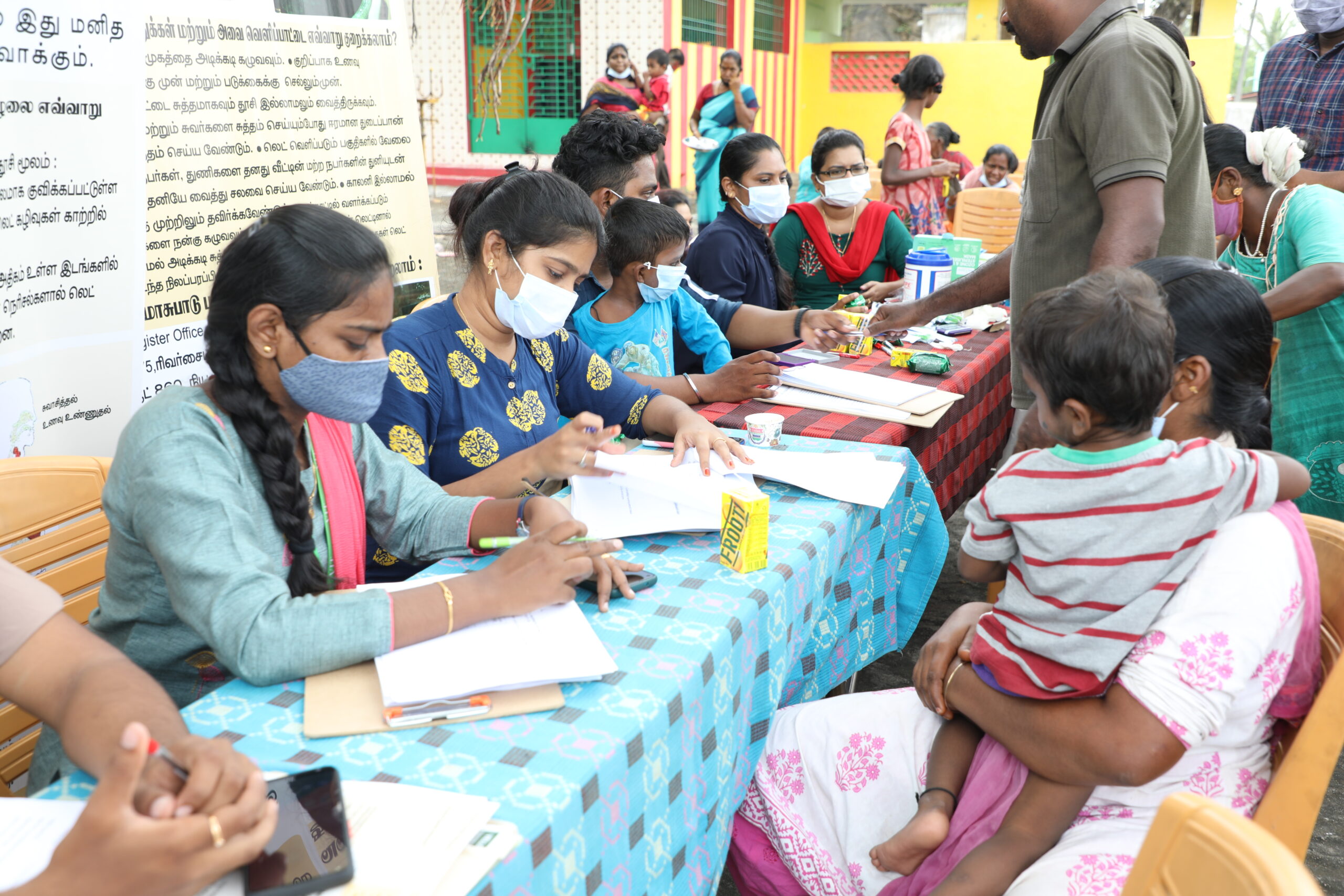

Childhood lead poisoning continues to be a serious public health concern, with even low levels of exposure affecting a child’s cognitive development, learning ability, and long-term health. To address this challenge a project titled “Strengthening Health Systems to Reduce Lead Exposure” funded by Takeda, is being implemented in Maharashtra in collaboration with PE Lead India Private Limited (Pure Earth), Vital Strategies, and the Public Health Department.
Expanding Efforts Across Maharashtra
Under the project, eight priority districts have been identified for targeted intervention. To date, five districts have successfully completed capacity-building and Institutional strengthening trainings: Pune, Thane, Kolhapur, Dharashiv, and Gondia. The coordinated efforts among partners and the active involvement of district health officials have ensured that the project is progressing satisfactorily, with strong momentum toward strengthening lead-related public health systems in Maharashtra.
Successful Training Conducted in Gondia
A district-level one day training session was conducted in Gondia district by PE Lead India Private Limited (Pure Earth), Vital Strategies, on 13.10.2025, bringing together government officials and health personnel. A total 24 qualified health professionals and community health workers attended the training workshop. The training covered:
1. Blood Lead Level (BLL) Testing Training

Participants were oriented on:
- The importance of BLL testing as the most reliable method to detect lead exposure in children.
- Step-by-step procedures for conducting BLL testing in children aged 1 to 6 years, the most vulnerable age group.
- Interpreting test results and understanding pathways for medical follow-up and community-level action.
2. Orientation on Home-Based Assessments (HBA)
Officials learned how to identify potential household sources of lead exposure, including, cookware and utensils, paints and pigment-based products, toys and household items, spices, etc.
Building Local Capacity for Long-Term Impact
With each district training, the project strengthens the ability of local health systems to detect, monitor, and prevent lead exposure. The sessions are designed to create a network of trained officials capable of carrying forward lead surveillance efforts independently. The involvement of qualified health professionals and community health workers continues to be a cornerstone of the project’s success. Their active participation ensures that knowledge reaches the community sustainably.

Looking Ahead
With Gondia successfully trained and five districts covered so far, the Takeda Project continues to make steady progress toward its goal of building a robust, state-wide response to childhood lead poisoning.
The partnership between PE Lead India Private Limited (Pure Earth), Vital Strategies, and the Public Health Department of Maharashtra is helping shape an institutional framework for long-term lead surveillance and safer environments for children.