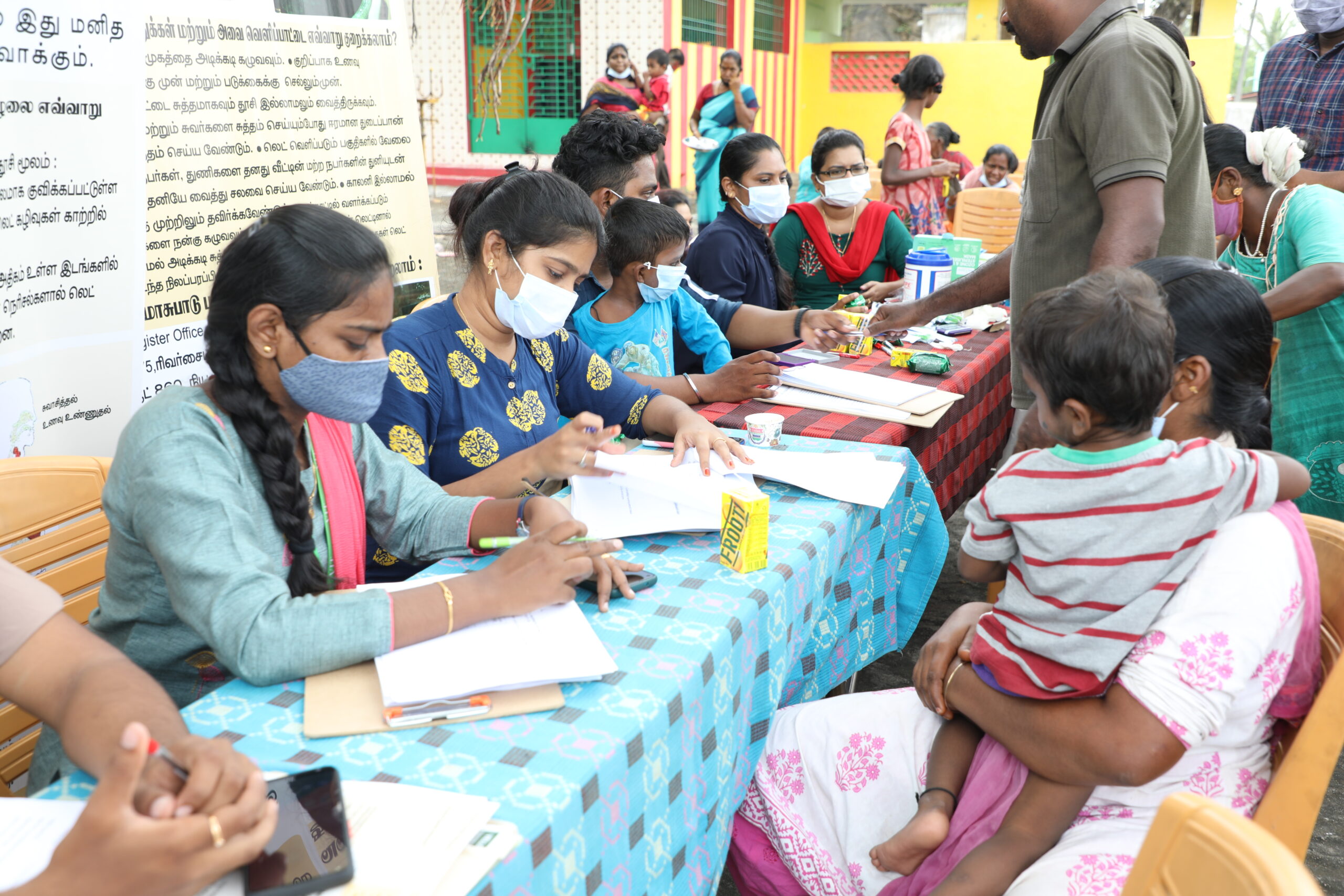
The harmful impact of childhood lead poisoning on cognitive development and long-term health continues to pose a serious public health challenge. To strengthen prevention and response systems, the Takeda-supported project “Strengthening Health Systems to Reduce Lead Exposure” is currently being implemented in Maharashtra, India in collaboration with PE Lead India Private Limited (Pure Earth), Vital Strategies, and the Public Health Department of Maharashtra.
Extending the Reach Across Maharashtra, India.
Eight priority districts have been selected under the project for targeted intervention, with six districts — Pune, Thane, Kolhapur, Dharashiv, Gondia and Amravati — having successfully completed capacity-building and institutional strengthening training. Collaborative efforts among partners, supported by strong district-level involvement of the health department, have played a key role in advancing a comprehensive public health response to childhood lead exposure in Maharashtra.
Advancing Lead Prevention Efforts Through Capacity Building in Amravati
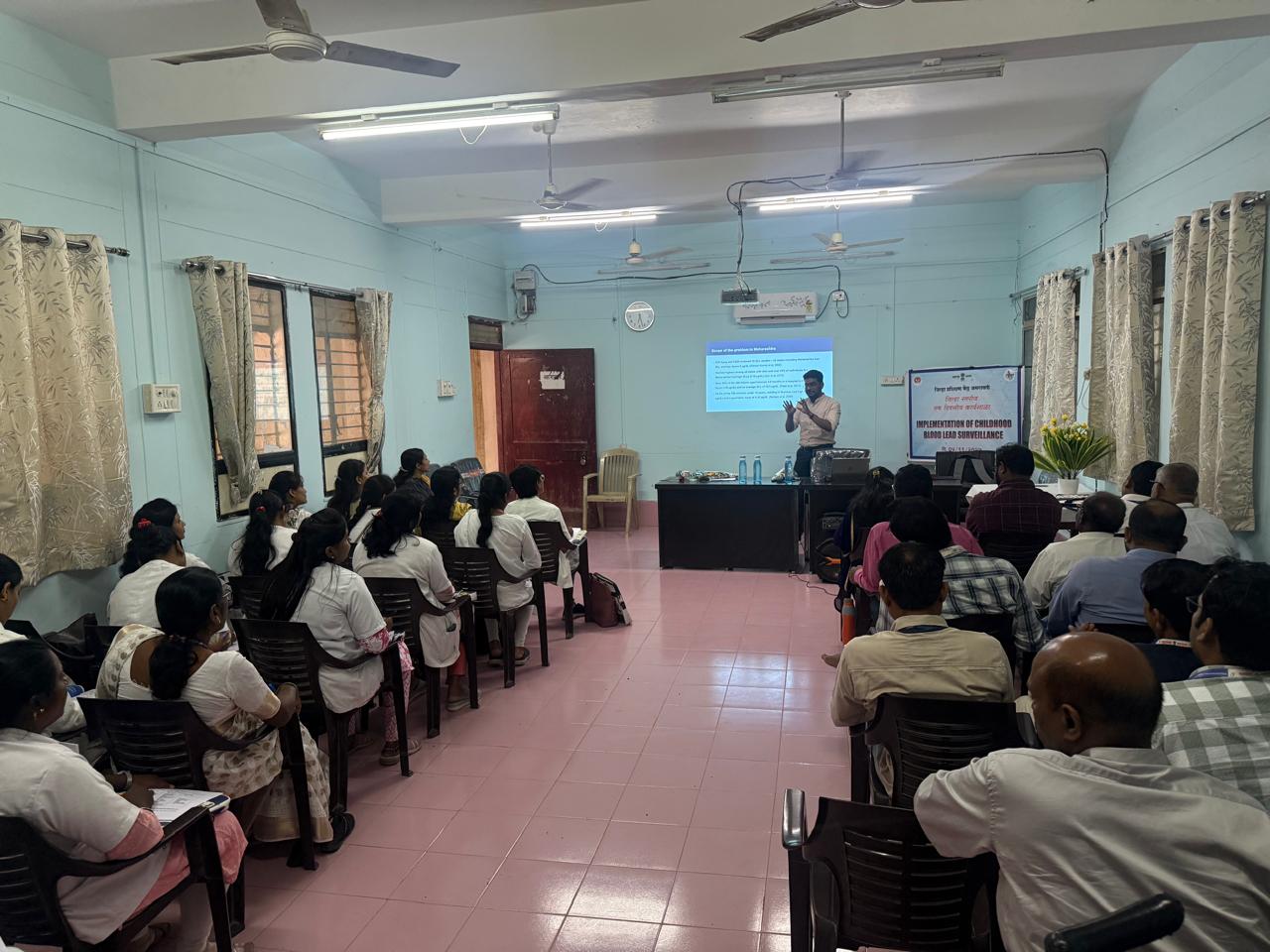
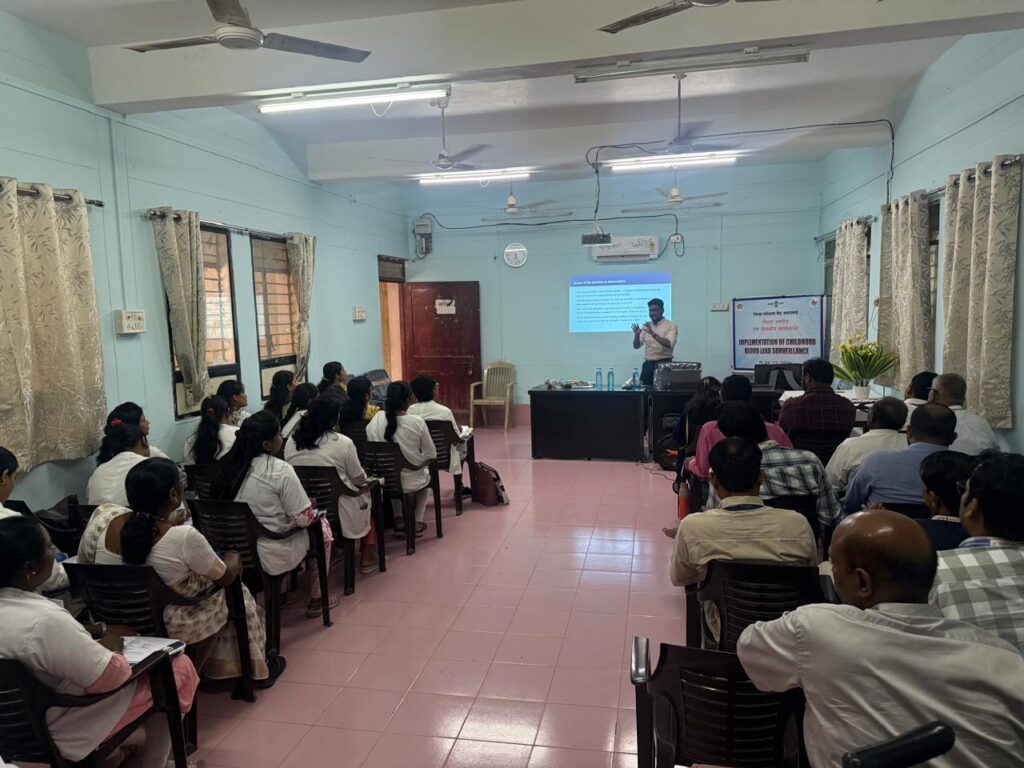
As part of ongoing institutional strengthening efforts, a one-day district-level training session was conducted in Amravati district on 4th November 2025 by PE Lead India Private Limited (Pure Earth) and Vital Strategies, with 32 health professionals and community health workers of public health department of Maharashtra in attendance.
Participants received detailed technical orientation on Blood Lead Level (BLL) testing as the gold standard for assessing lead exposure in children. The training provided a standardized, step-by-step approach for conducting BLL testing among children aged 1–6 years, the population at highest risk due to increased absorption and developmental vulnerability.The session also addressed interpretation of BLL results in accordance with recommended reference values, including guidance on referral mechanisms, and follow-up actions at both facility and community levels. Additionally, participants were trained on systematic identification of potential household and environmental lead sources, such as cookware and utensils, lead-based paints and pigment-containing materials, toys and consumer products, and contaminated spices, to support targeted risk mitigation and prevention strategies.
Empowering Local Health Systems for Lasting Impact
Through successive district-level training, the project is strengthening the capacity of local health systems to systematically detect, monitor, and prevent childhood lead exposure. These sessions are designed to establish a cadre of trained government officials and health personnel capable of independently implementing Blood Lead Level (BLL) surveillance and follow-up activities within existing health system structures.
The continued engagement of qualified health professionals and community health workers remains a critical component of the project’s success. Their active involvement facilitates effective knowledge transfer, community outreach, and sustained implementation, ensuring that lead prevention and surveillance efforts are embedded at the grassroots level.
Looking ahead
With six districts now trained, including Amravati, the Takeda Project is making steady and measurable progress toward establishing a robust, state-wide framework to address childhood lead exposure in Maharashtra. The multi-partner collaboration between PE Lead India Private Limited (Pure Earth), Vital Strategies, and the Public Health Department of Maharashtra continues to strengthen institutional capacity for long-term Blood Lead Level (BLL) surveillance and prevention efforts. The remaining two priority districts—Nandurbar and Hingoli—are scheduled to be covered in the forthcoming phase, ensuring full coverage of all identified districts and reinforcing the sustainability and scalability of the initiative.